
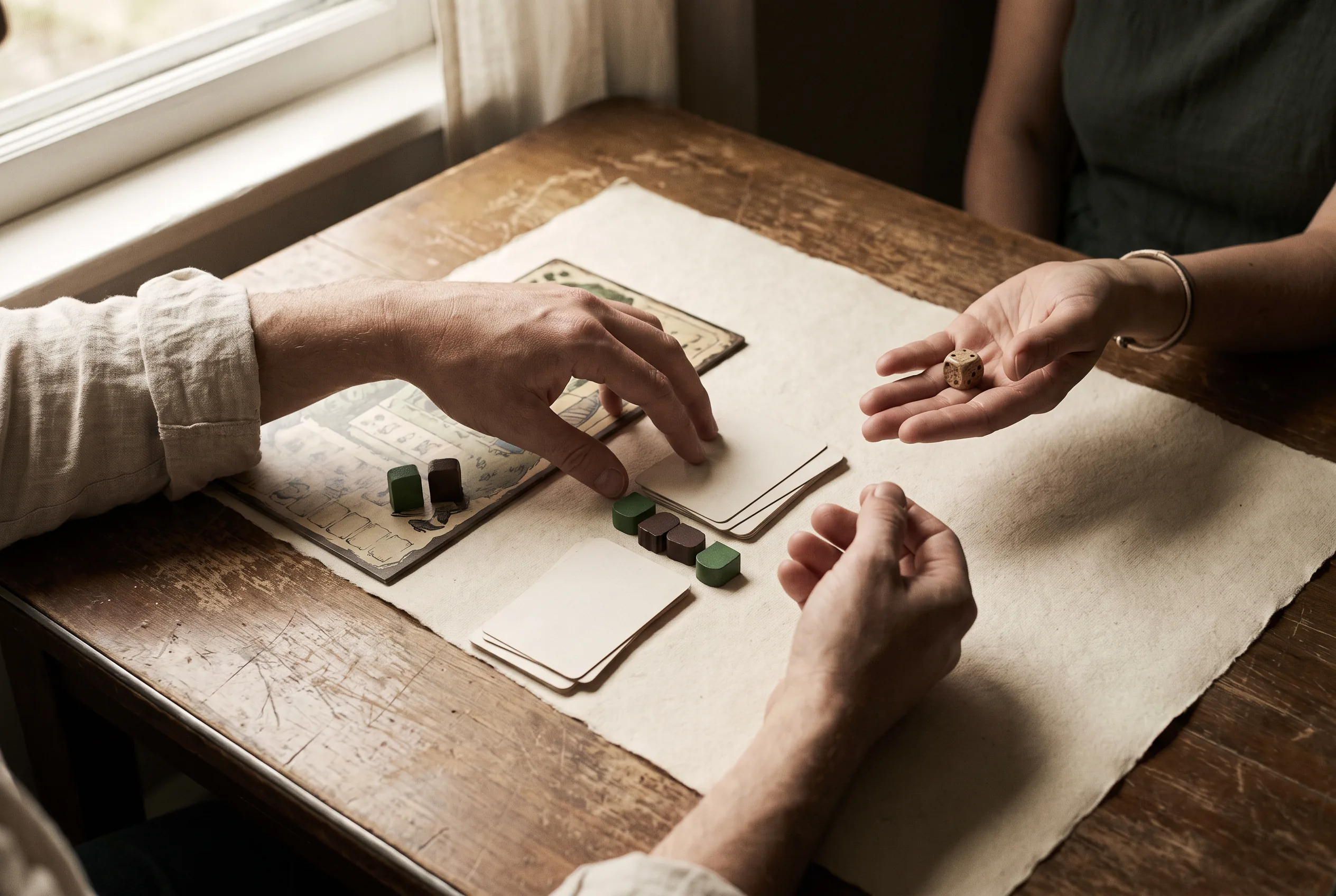
 18:40 · arrive
Open the table
Place the pieces where everyone can see them, then let conversation settle before explanation begins.
A tabletop field guide
Counterlight Almanac gathers practical notes for kinder, clearer tabletop evenings: how to welcome a new player, read a dense rulebook, set a calm pace, and put every tiny piece away without fuss.
Find your table moodMade for real rooms, real friends, and unhurried play


01 — host’s shelf
A useful shelf is not a museum of difficult boxes. It is a small working library: familiar enough to teach, varied enough to meet the room, and easy to return to after a long week.
02 — table mood selector
A title is only part of an invitation. Pick the tempo, attention, and social energy you want the room to carry.
For conversation-led evenings: choose a shared map, a modest decision space, and time to notice each other’s ideas.
Set out tea, a single lamp, and a game that rewards patient turns.
03 — game-night timeline
The point is not to optimize every minute. It is to make the shape of the evening legible, so nobody wonders whether they are slowing things down.
18:40 · arrivePlace the pieces where everyone can see them, then let conversation settle before explanation begins.
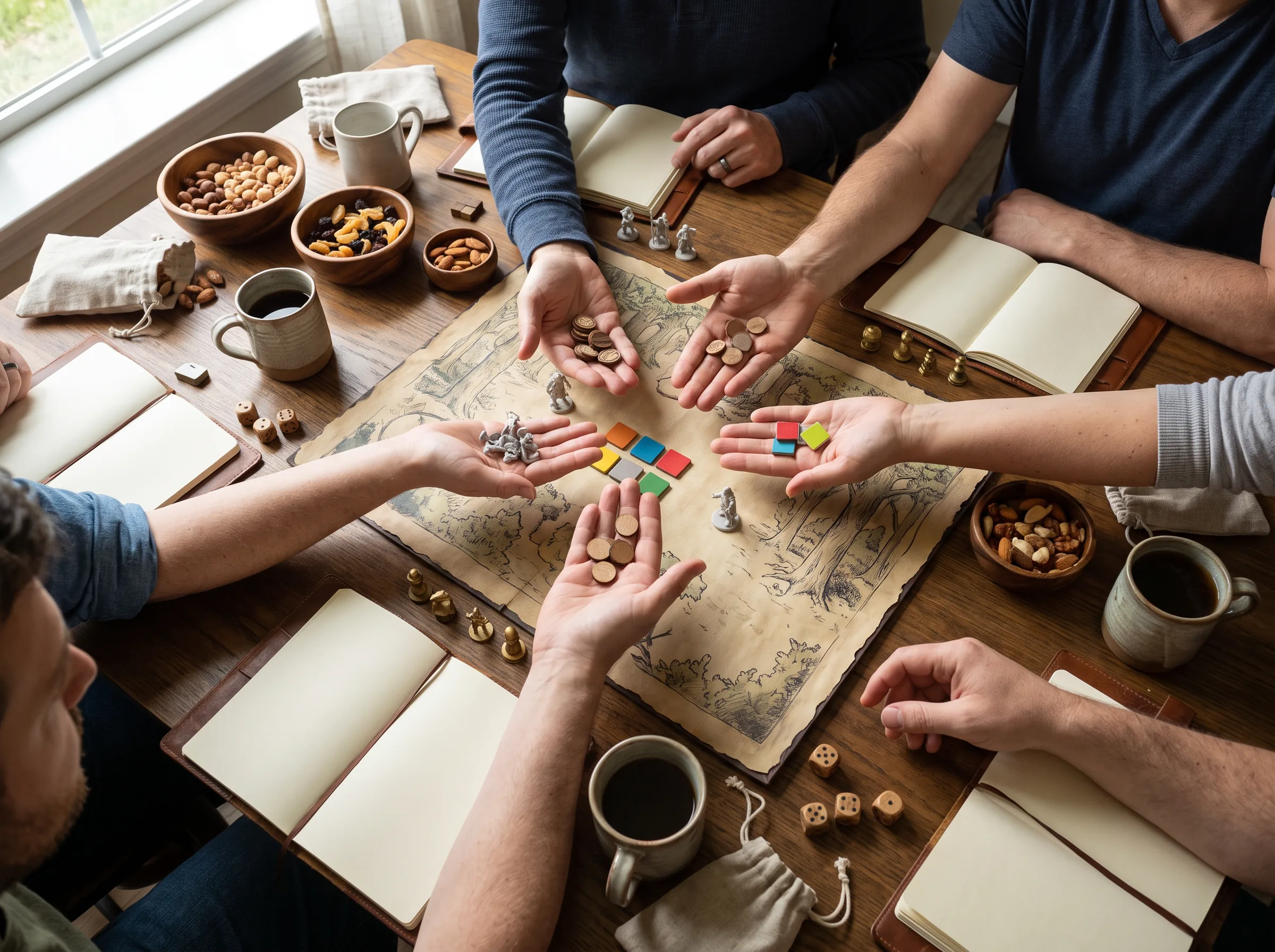 19:05 · teach
Start with what players are trying to accomplish, not the exception hidden in round three.
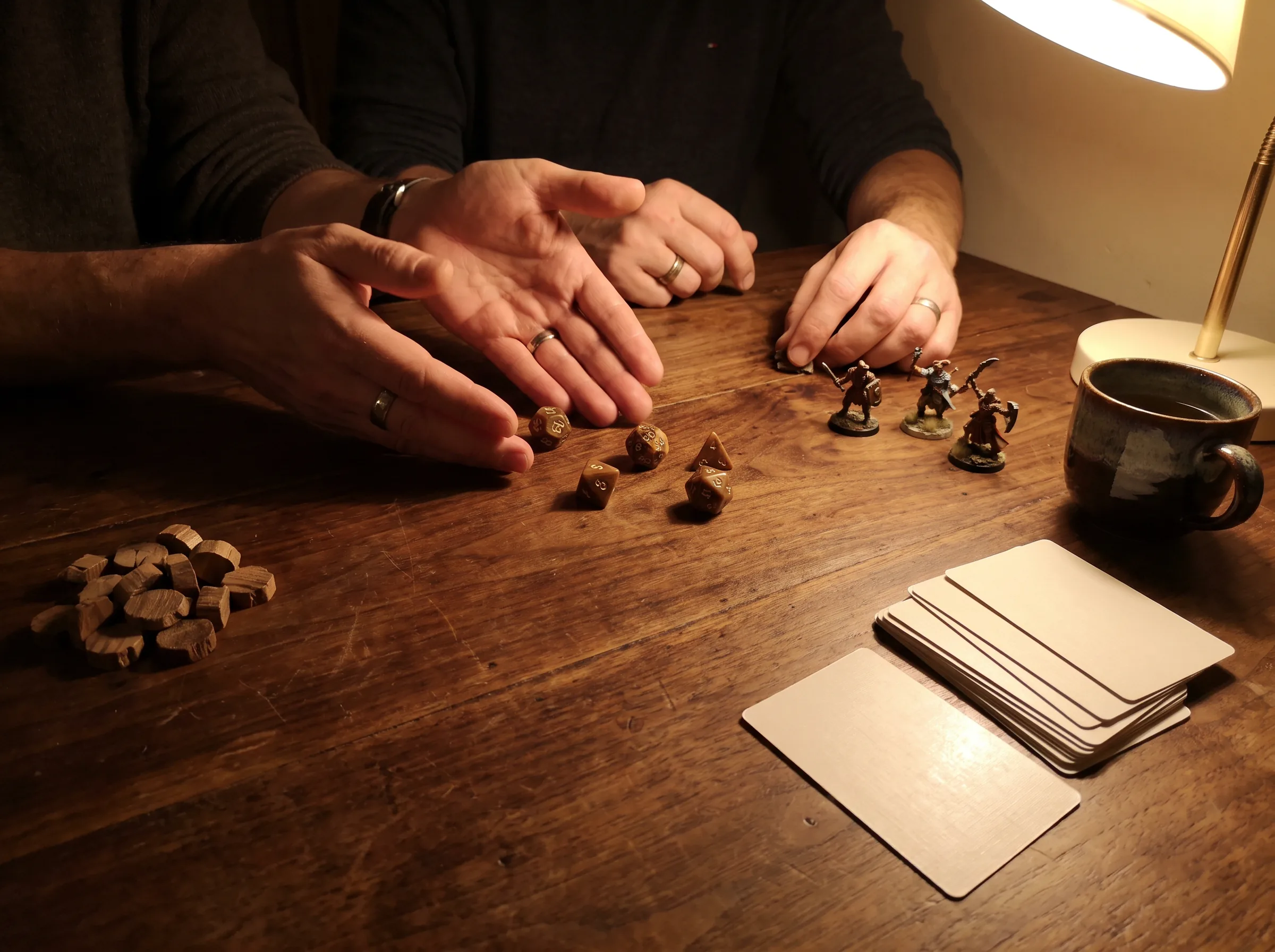 20:00 · play
Use one shared reference spot for rules questions and give every turn a little breathing room.
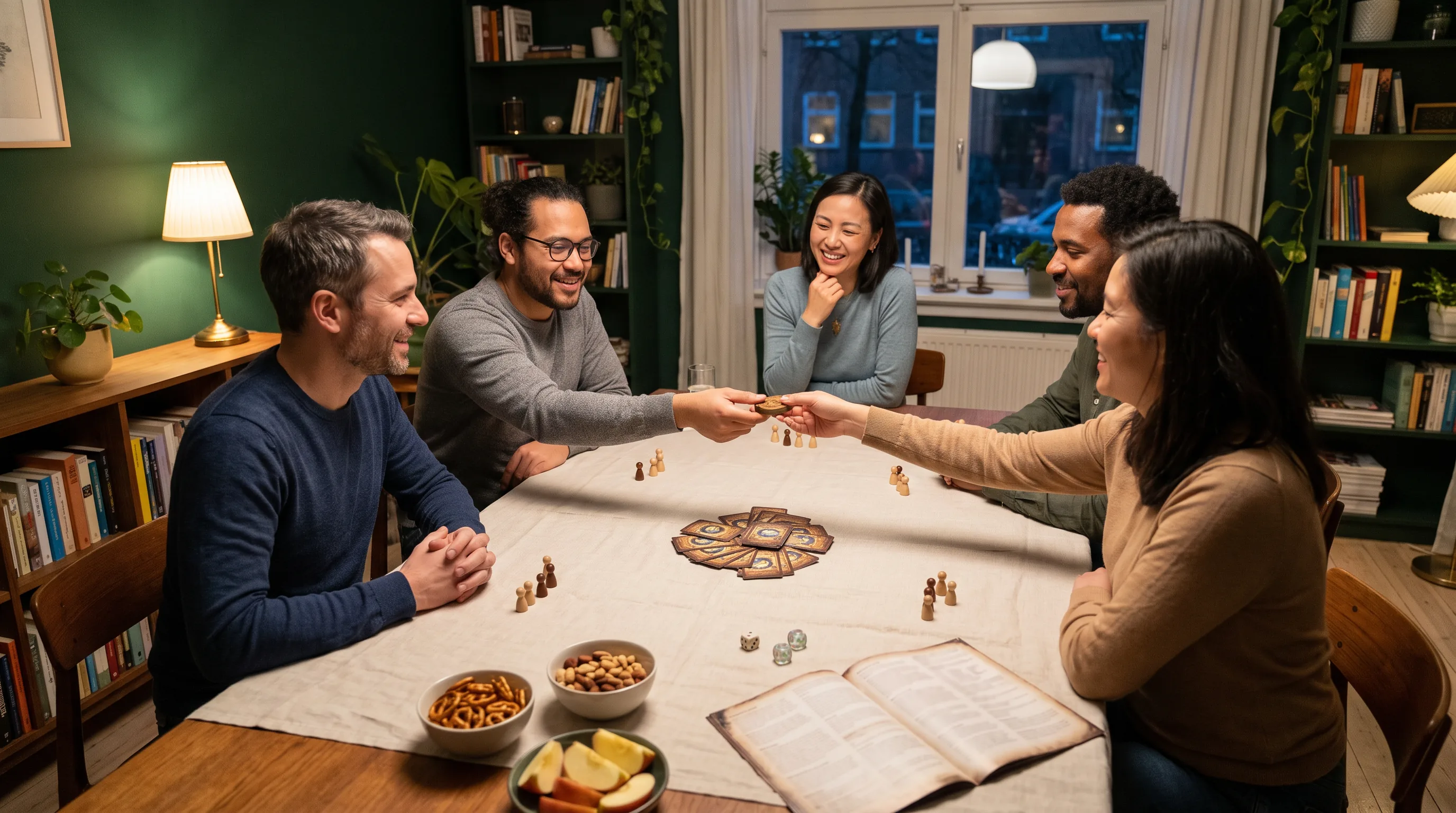 21:20 · close
Before packing, notice one moment worth revisiting next time. It makes an ending feel like a return.
04 — physical component anatomy
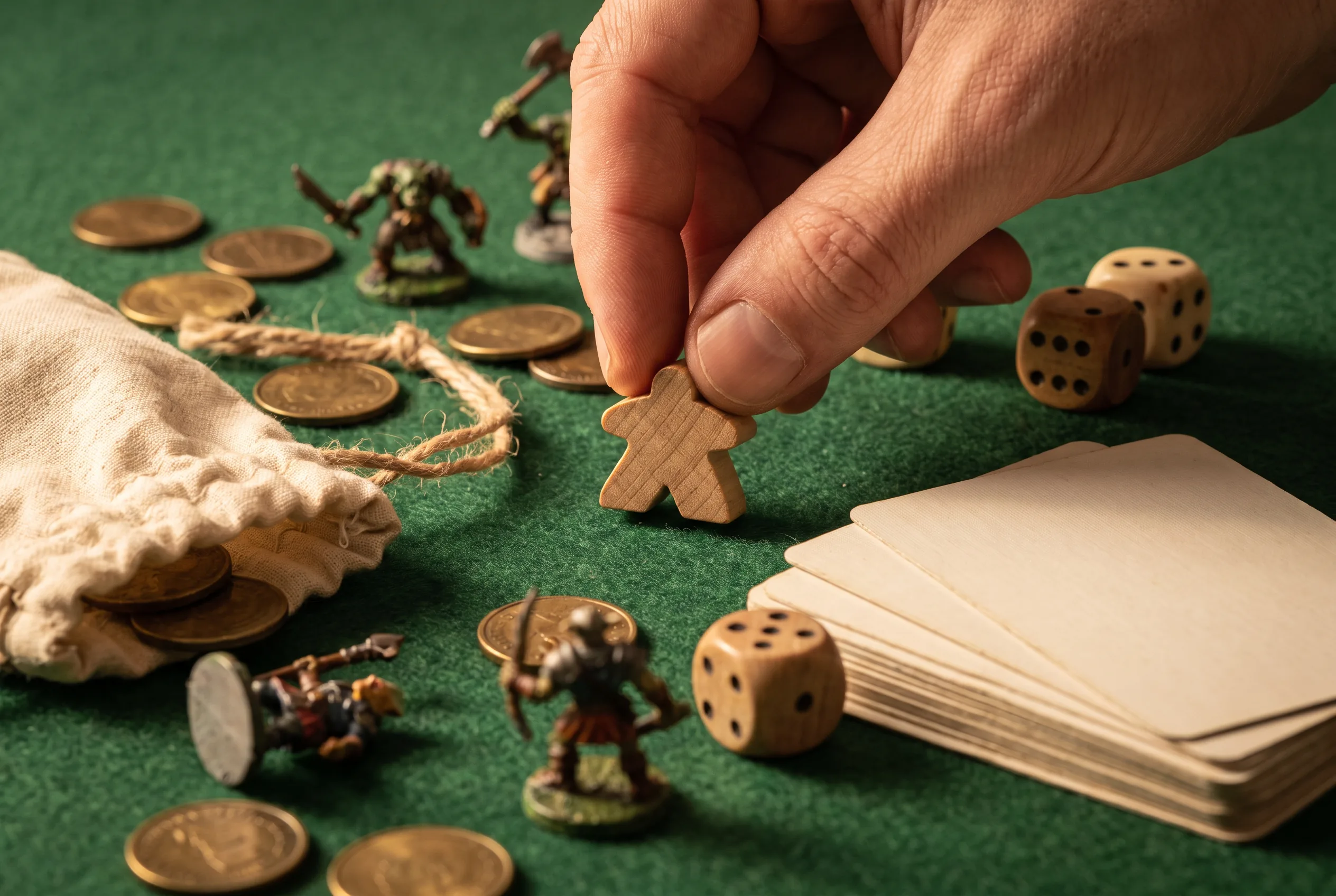
Give each player an object they can recognize without asking. A marker is a small promise: you have a place here.
Group small resources in open bowls or trays so the group can see what has changed and why it matters.
Stack active cards neatly and discard face down. Fewer visual decisions make room for the decisions that count.
Roll away from fragile pieces. A simple felt corner or tray prevents a dramatic result from becoming a scattered board.
05 — quiet strategy notebook
06 — rules-reading rail
A rulebook is reference material, not a performance. Translate the next useful thing, then return to the page when the table has context.
Show the shared board, each player’s pieces, and the end condition. Let the group see the whole journey before naming every road.
Walk through one normal turn aloud. Speak in concrete verbs—draw, place, trade, resolve—while your hands point to the relevant space.
Keep unusual cases nearby rather than up front. When one appears, pause, read it together, and resume with a clear shared decision.
07 — player-role board
Roles are not ranks. They are soft invitations that distribute practical care around the table and make joining easier for new players.
Clears a shared centre, locates components, and checks that every player can reach the important spaces.
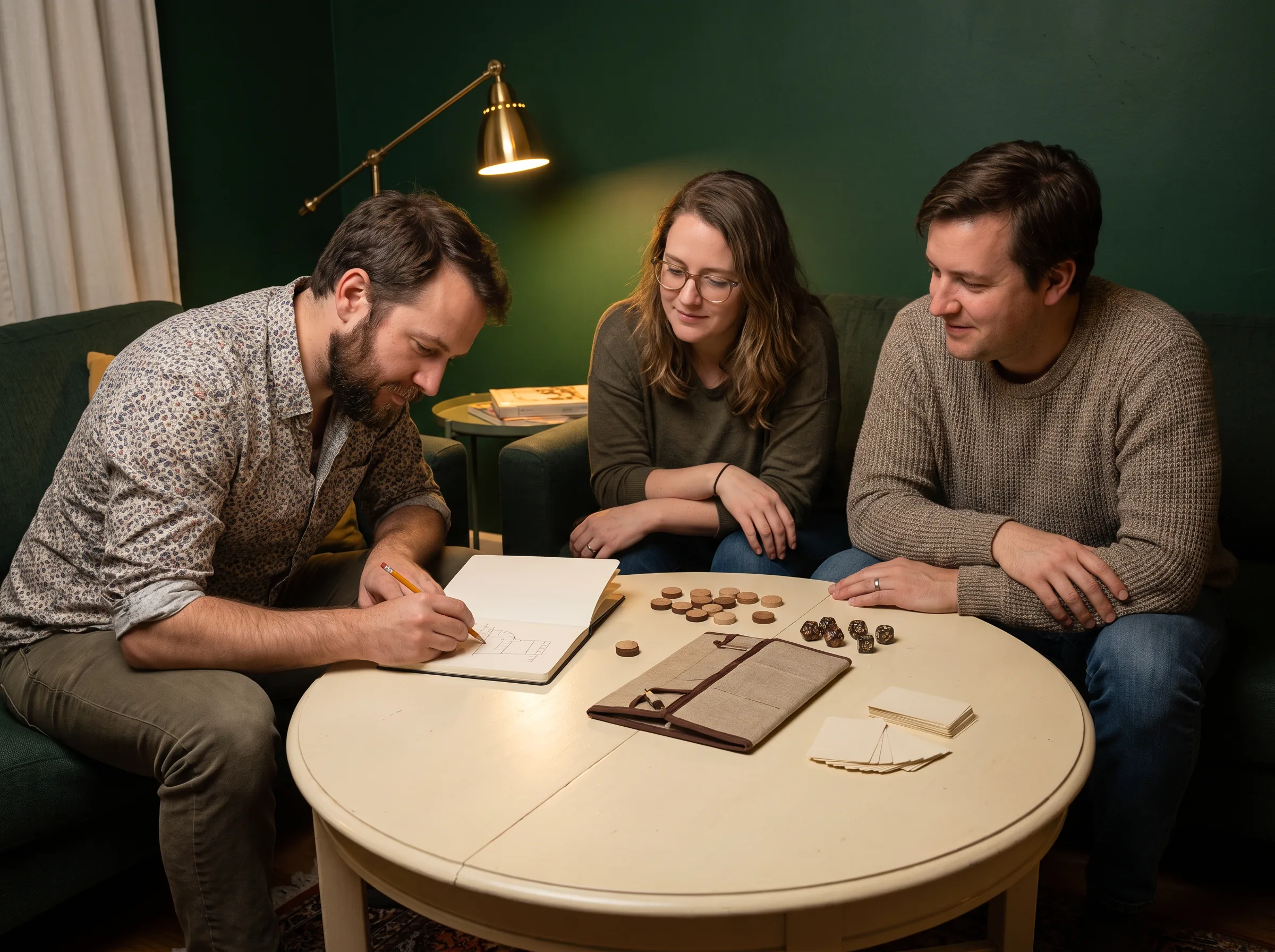
Writes down only the questions worth returning to, so the same uncertainty does not interrupt three different turns.
Notices whether the room needs a recap, a stretch, or an extra minute to weigh an interesting choice.
Sorts the last pieces with another player and asks what the group might want to try on its next visit.
08 — packing checklist
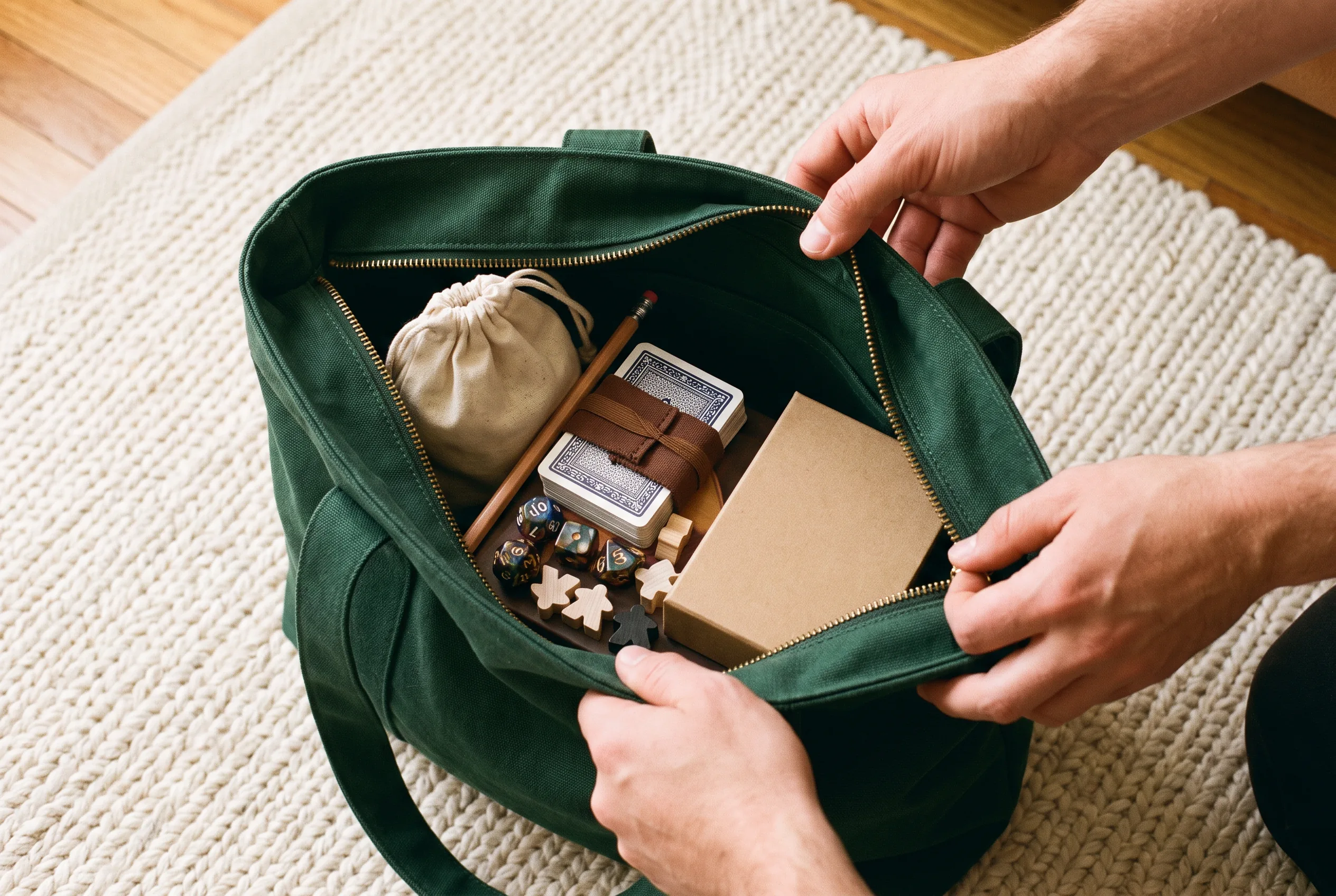
This list stays in this browser only. It is a small reset ritual for the end of a game night, not an account or a shared record.
09 — FAQ
Clear expectations are more welcoming than expert knowledge. Here are a few notes for making room around a tabletop without making the night feel formal.
10 — contact panel
Questions about the guide, a thought from your own table, or a topic that deserves a clearer explanation? Use the draft below or write directly to [email protected].
This site does not send messages automatically. It only prepares an email draft in your mail app after you review the information.
A final table note